A good cat-carrier setup begins before the car ride. Check that the carrier allows your cat to stand, turn, and settle, make it familiar through calm practice at home, and plan where it will sit in the vehicle. The 2025 FelineVMA position statement recommends securing a carrier on the floor behind the driver or passenger seat; it advises using a seat belt only with a crash-test-certified carrier.
Choose a carrier by your cat's measurements and the maker's directions, leave it open in a familiar room, and use a safe vehicle placement that follows FelineVMA guidance.
Check carrier fit and construction
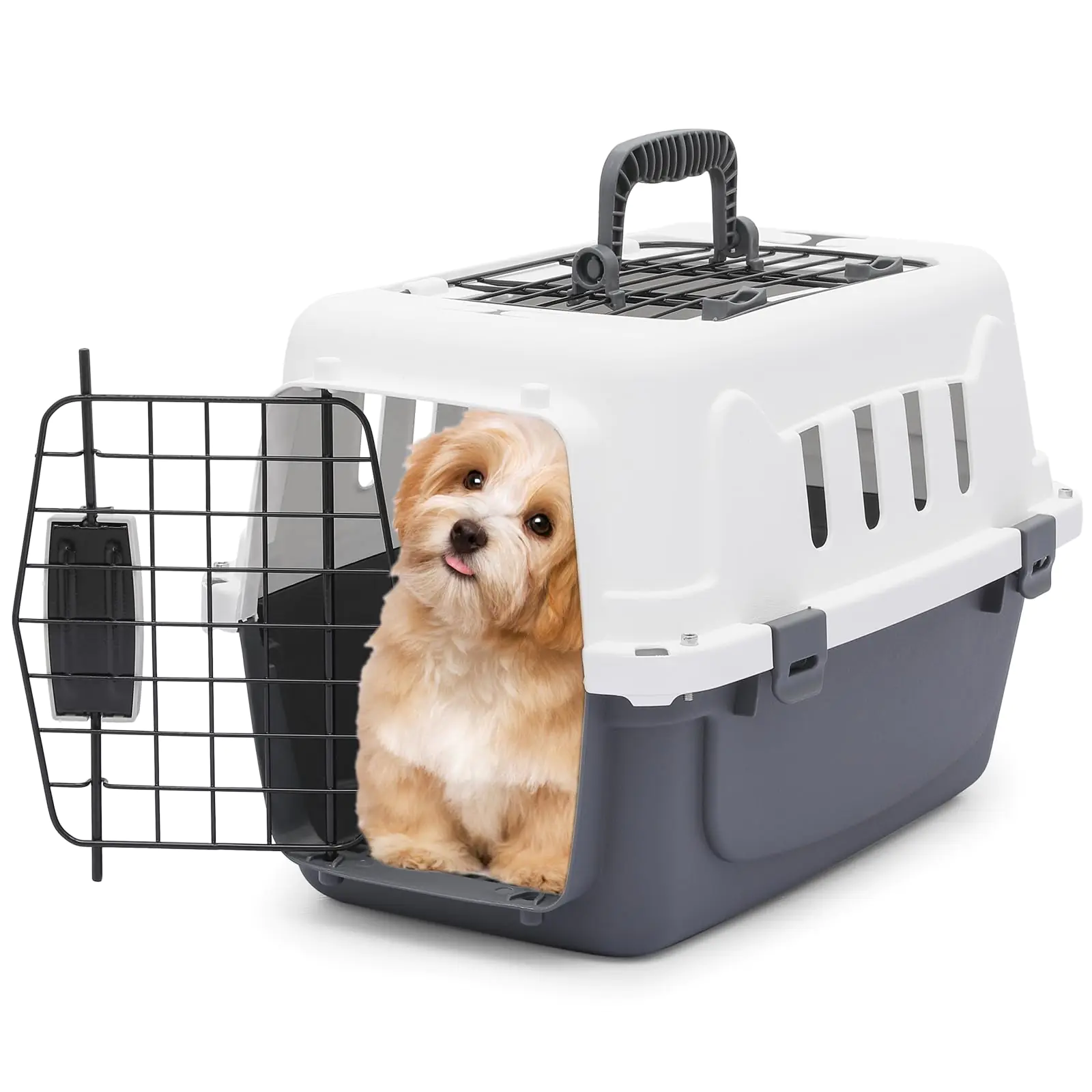
Measure your cat from nose to tail base and from the floor to the top of the head while standing naturally. Compare those measurements with the carrier's usable interior space, not only its outside dimensions. Your cat should be able to stand, turn, and lie down. Check the doorway width, ventilation openings, handle, latches, and whether the carrier can be cleaned after a spill. If you are comparing models, this two-door hard-sided carrier example (paid link to Amazon) is one option to measure.
A hard-sided carrier may offer a stable shell and removable top on some models; a soft-sided carrier may fold for storage but depends on intact mesh and zippers. These are practical differences, not a guarantee that either style is suitable for every trip. For car transport, product category words such as hard-sided cat carrier or soft-sided cat carrier help you compare form, but the maker's vehicle-use instructions and safety certification matter more than a search label.
Make the carrier familiar, then prepare the car
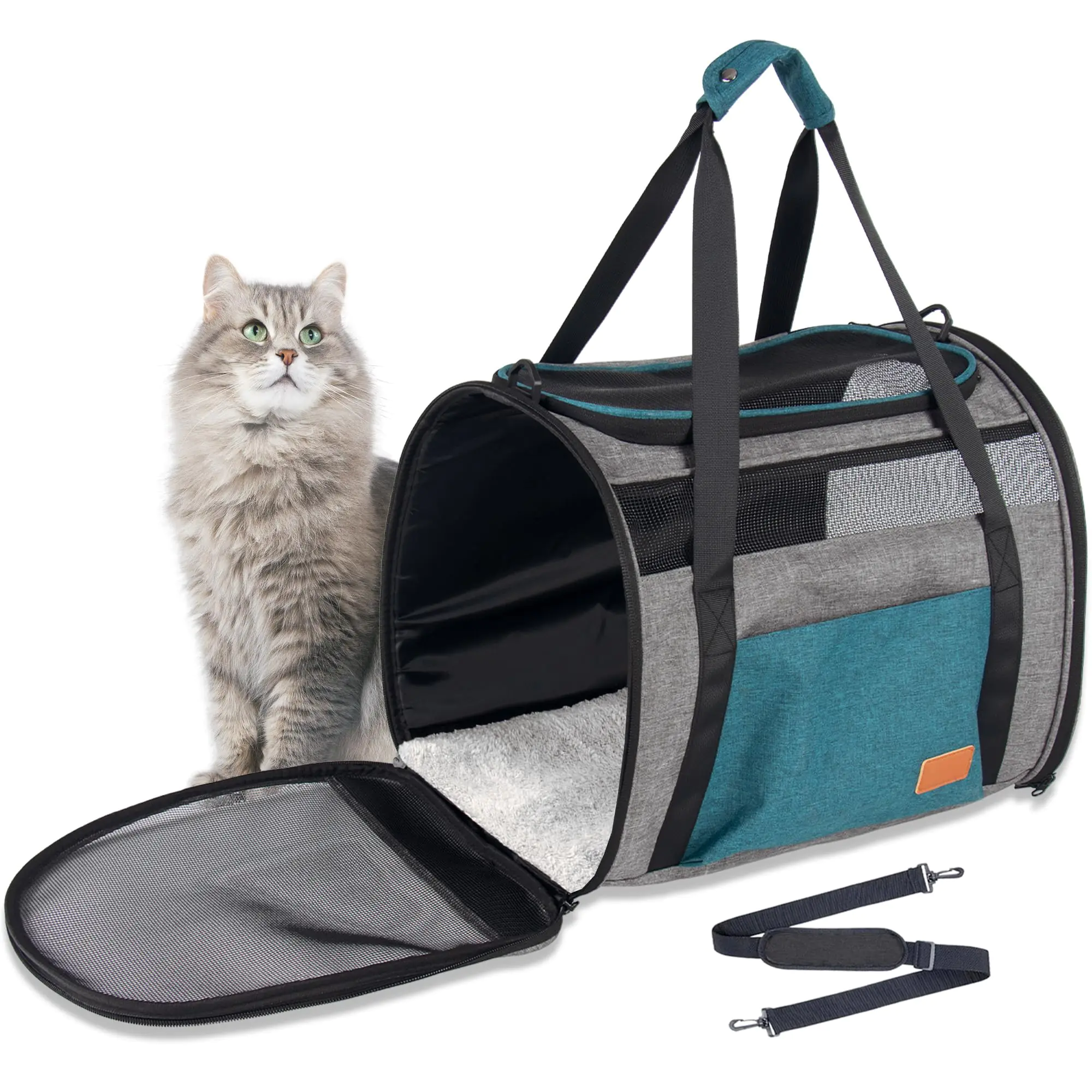
Leave the carrier open in a quiet room with familiar bedding. Let the cat investigate voluntarily; reward calm approaches and short stays. Later, close the door briefly only if the cat remains comfortable, then reopen it. Do not force a fearful cat inside or wait until the last minute to introduce the carrier. If travel distress is severe, ask your veterinarian for a plan rather than trying medication or supplements on your own.
Before driving, place the carrier on the floor behind the driver or passenger seat as advised by FelineVMA. Do not buckle a carrier that is not crash-test certified; the statement warns that a belt could crush an uncertified carrier. Keep the carrier closed during stops and minimize abrupt handling. Use a familiar blanket to offer a hiding option if appropriate and if it does not block ventilation.
- Confirm the latch closes fully before lifting the carrier.
- Pack a spare liner, waste bags, and contact information.
- Never leave your cat alone in a parked vehicle.
Continue with measuring your cat, making the carrier part of home, and checking its car placement.
Practical decision check
Pre-trip checklist: In the days before travel, confirm that the carrier is intact, sized for your cat, and familiar; check the latch and ventilation; place a clean liner that does not reduce movement; and decide the floor space behind a front seat. If your cat has never practiced with the carrier, start with it open at home instead of introducing it only on appointment day.
On departure day, load the cat in a quiet closed room, check the latch, and carry the carrier level. Put it on the floor behind the driver or passenger seat. The current FelineVMA statement says a seat belt should only be used with a crash-test-certified carrier because a belt can crush an uncertified one. If you are uncertain whether a model is certified, ask the manufacturer. Never leave the cat unattended in a parked car, and keep the carrier closed at stops.
After the trip, let the cat exit in a secure room before opening the carrier fully. Wash the liner as directed and leave the carrier available so the next trip does not begin with a sudden search for it.
Separate clean and used travel supplies
Keep a spare clean liner and towel in a small cat travel bag, then place any used or damp textile in a separate washable wet-dry bag outside the carrier. This keeps supplies together while leaving the carrier floor, movement space, and ventilation clear. When comparing a cat carrier liner or travel organizer, check the carrier’s usable dimensions and each item’s wash directions.
Keep reading: cat carrier setup guide · opening styles · hard vs. soft carriers
Helpful source: FelineVMA: 2025 transportation of cats in motor vehicles
Product-category images are illustrative examples only; they do not represent a Raspaw product test, safety certification, or recommendation.
Optional hard-sided carrier to compare
If your current carrier no longer fits or has worn hardware, compare this optional model against the cat's measurements; it is not a safety certification. The Amazon Basics two-door carrier (paid link to Amazon) listing gives outer dimensions of 22.8 × 15 × 13 in and describes front and top entry. These are outside dimensions, not the usable interior; compare the inside space with your cat and inspect ventilation and every latch. The listing alone does not establish crash-test certification.
Follow the exact carrier and vehicle instructions. Use a seat belt only if that carrier is crash-test certified, and let the cat approach and leave the open carrier voluntarily during home practice.
As an Amazon Associate I earn from qualifying purchases.