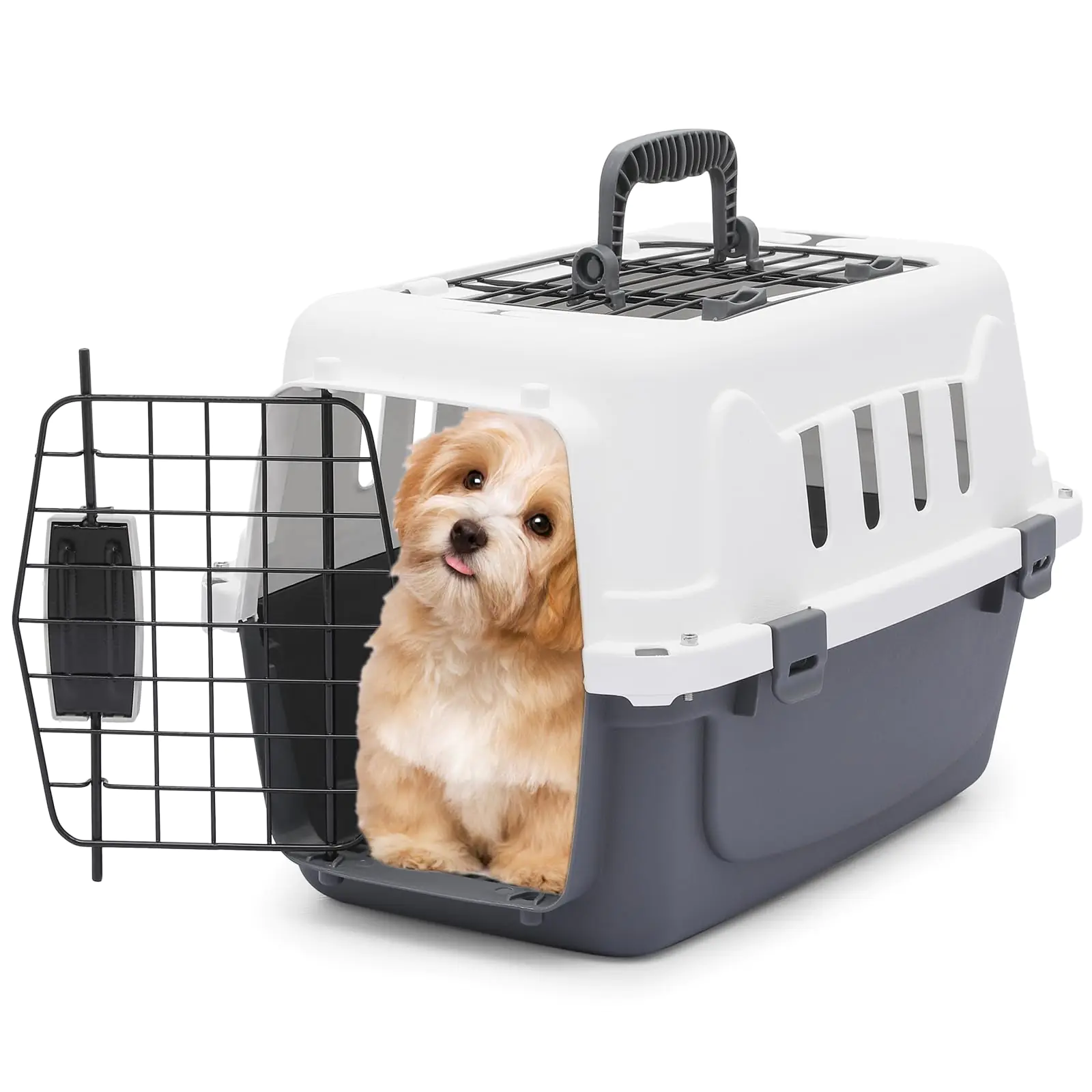
Measure your cat for a carrier while the cat is standing naturally and relaxed. Compare body length and height with the carrier's usable inside dimensions, then check the door opening and the carrier maker's sizing guidance. For comparison, this two-door hard-sided carrier example (paid link to Amazon) lists outside dimensions of 22.8 × 15 × 13 in; use the manufacturer's usable interior dimensions when checking fit.
Use a soft tape without pulling the cat into position. Select enough interior room to stand, turn, and lie down, while still following the carrier's intended-use instructions.
Measure calmly and record the cat's natural size
Measure from the tip of the nose to the base of the tail for body length, and from the floor to the top of the head while the cat is standing. Do not include the tail as usable body length unless the carrier instructions specify otherwise. If the cat will not stand calmly, take several relaxed observations instead of restraining it for a perfect measurement.
Use the carrier's listed internal dimensions where available. Outside dimensions can include thick walls that reduce the space inside. Check that the door is wide enough for a comfortable entry and that any top opening, handle, ventilation, and latch are practical for your cat and trip.
Confirm comfort and transport instructions
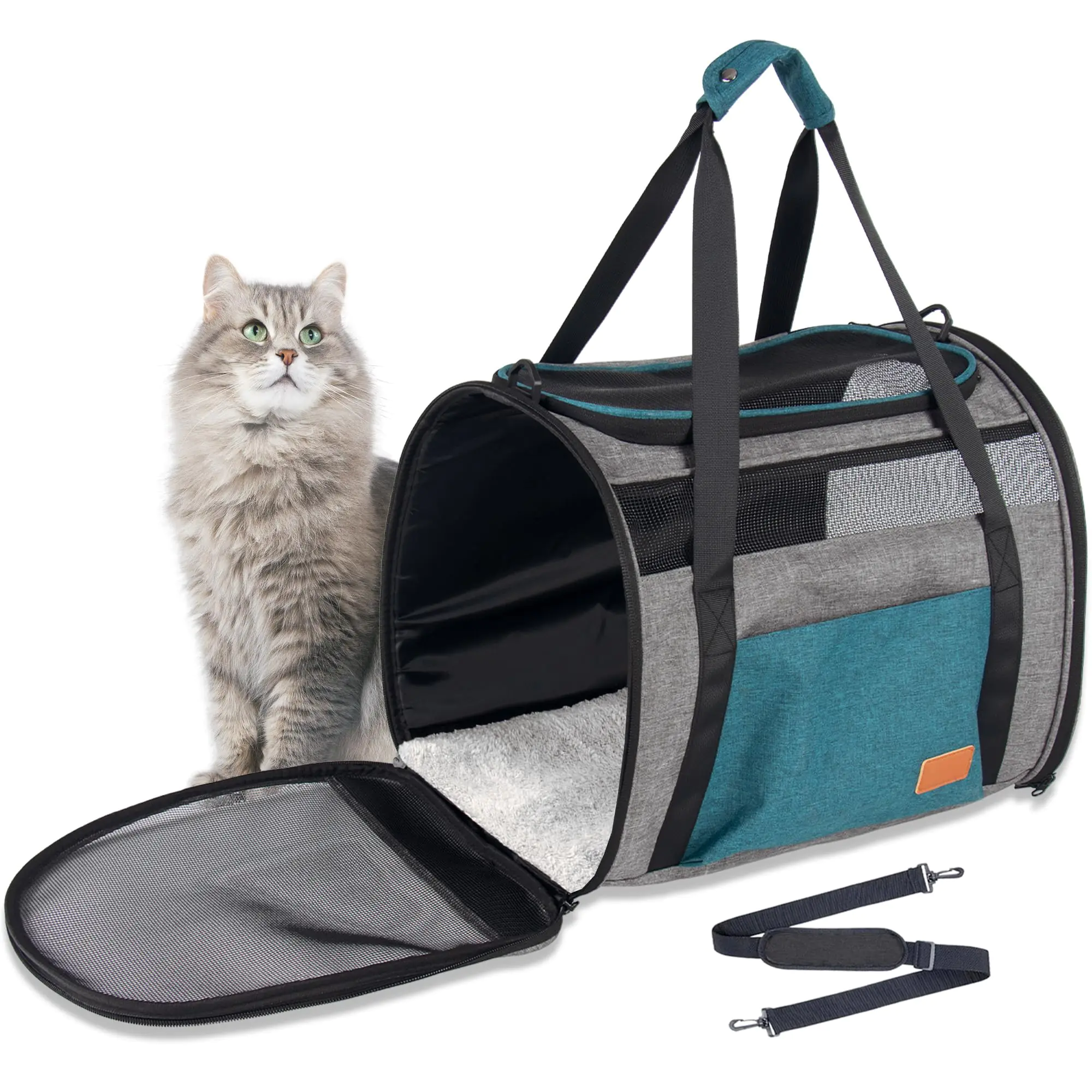
Before travel, let your cat explore the carrier at home and observe whether it can stand, turn, and settle without pressing against the door. A liner should not take away so much floor space that movement becomes cramped. If a soft carrier collapses or bends around the cat, check the maker's dimensions and structure before relying on it for a car trip.
For vehicle placement, follow the current FelineVMA recommendation: carrier on the floor behind the driver or passenger seat. Seat belts should only be used with crash-test-certified carriers. If you cannot confirm those details, ask your veterinarian or the carrier maker before travel.
- Save the cat's measurements and the exact carrier model.
- Recheck after adding thick bedding or a liner.
- Do not use a carrier that has damaged latches or ventilation openings.
See the cat carrier setup guide and car placement checklist.
Before choosing or traveling
Fit check after setup: Put the liner and water-resistant pad you plan to use inside, then recheck the usable floor area and door clearance. Let your cat enter voluntarily and observe whether it can turn around without pressing the door. If your cat is between sizes, use the maker's sizing guidance and ask your veterinarian about the intended trip; avoid choosing a smaller model just because it is easier to carry.
Keep reading: cat carrier setup guide · carrier types
Helpful source: FelineVMA: 2025 transportation of cats in motor vehicles
Product-category images are illustrative examples only; they do not represent a Raspaw product test, safety certification, or recommendation.
Optional hard-sided carrier to compare
This listing can serve as a size-comparison example only; its outside measurements do not establish usable interior space or fit. The Amazon Basics two-door carrier (paid link to Amazon) listing gives outer dimensions of 22.8 × 15 × 13 in and describes front and top entry. These are outside dimensions, not the usable interior; compare the inside space with your cat and inspect ventilation and every latch. The listing alone does not establish crash-test certification.
Follow the exact carrier and vehicle instructions. Use a seat belt only if that carrier is crash-test certified, and let the cat approach and leave the open carrier voluntarily during home practice.
As an Amazon Associate I earn from qualifying purchases.