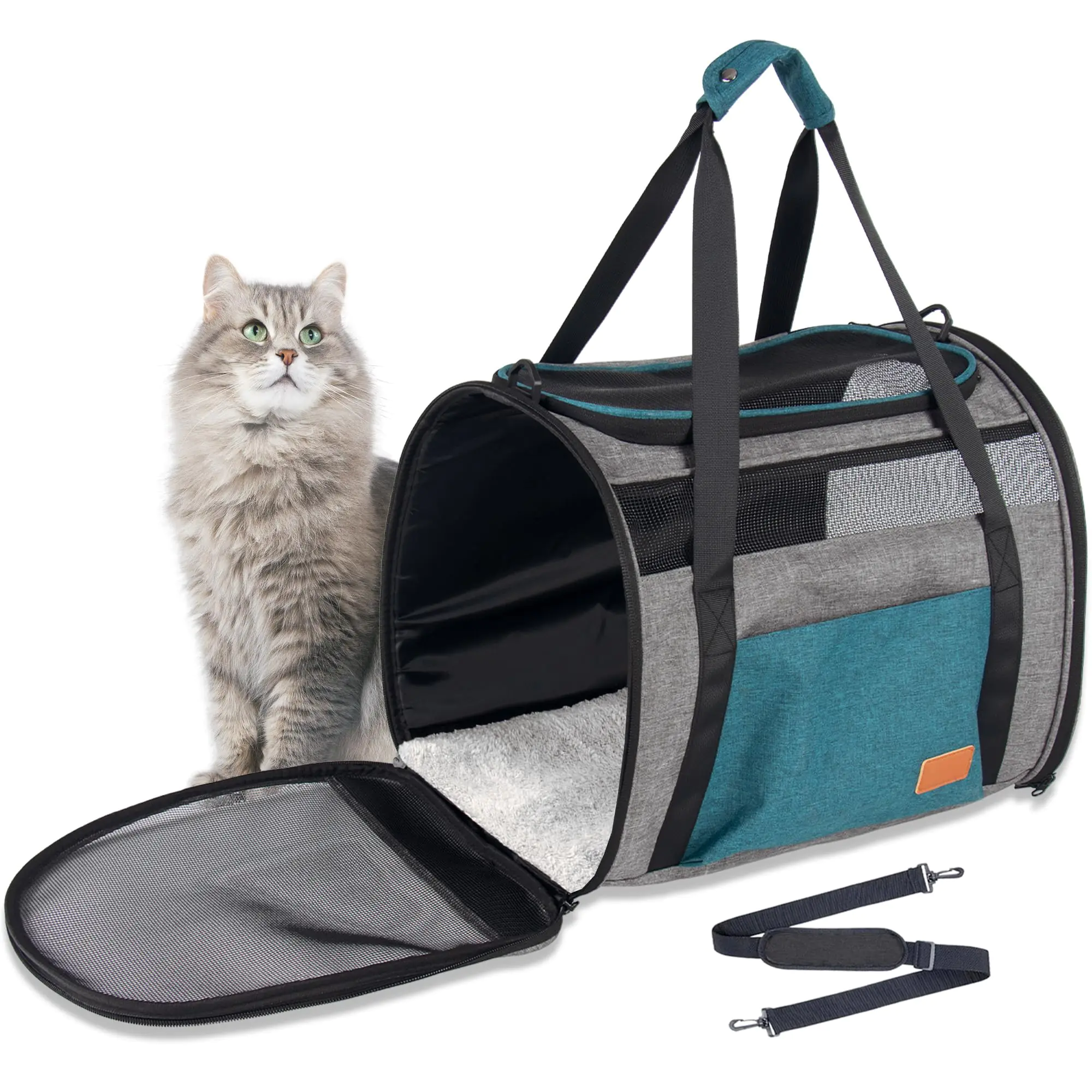
A hard-sided cat carrier (paid link to Amazon) has a rigid shell; a soft-sided carrier uses fabric panels and mesh. Compare the usable interior, ventilation, closure, cleaning, and exact travel instructions before deciding which form is right for your cat.
Hard sides can be easier to wipe; soft sides may fold for storage. Neither description proves car safety. Check the exact model and FelineVMA transport guidance.
Compare access, cleaning, and structure
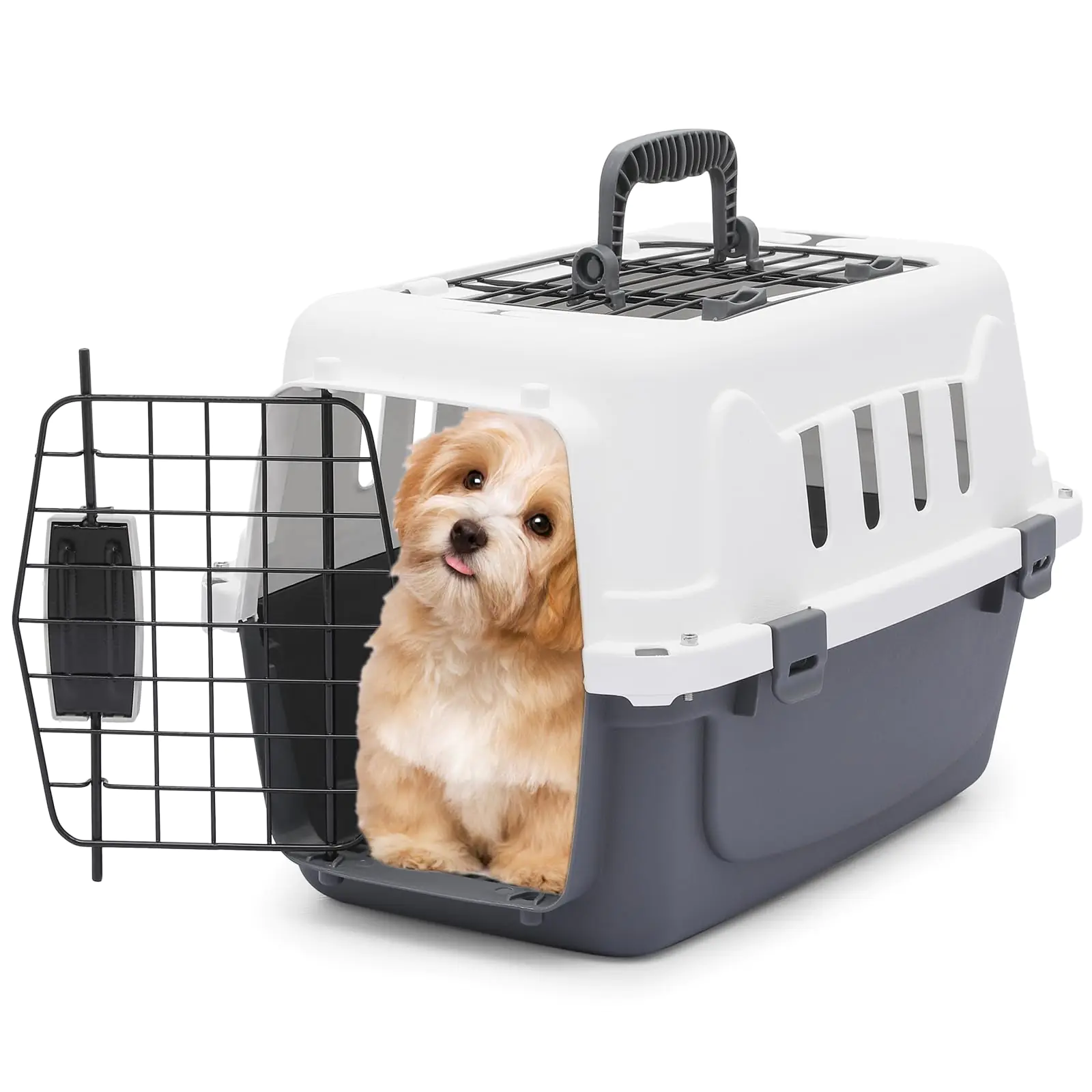
On a hard carrier, inspect seams, ventilation openings, door latches, and whether the top separates securely if it is designed to do so. A removable top can help with cleaning, but each latch must close properly before travel. On a soft carrier, examine mesh panels, zippers, seams, and the base. Check that it holds its stated shape when closed and that the cat cannot push through a damaged panel.
Cleaning needs depend on the accident and the maker's care directions. A rigid shell may be wiped and washed only as instructions permit; fabric panels may require spot cleaning or a removable liner. Do not use a household chemical that could remain on a surface the cat will lick or rub against.
Check vehicle guidance and your cat's comfort
Let the cat explore the carrier at home and observe whether it can stand, turn, and settle. Do not choose a smaller carrier simply because it is easier to store. For vehicle placement, the current FelineVMA position statement recommends the floor behind the driver or passenger seat. It says seat belts should only be used with crash-test-certified carriers; a belt can crush an uncertified carrier.
- Pick the form your cat can enter voluntarily.
- Check all closures before lifting the carrier.
- Recheck ventilation and fit after adding bedding.
If you cannot verify vehicle suitability, consult the carrier maker or your veterinarian. See the full carrier setup guide and car placement checks.
Practical decision check
Use the trip and cleaning routine as tie-breakers: If easy wipe-down after an accident is a priority, examine whether a hard carrier's top detaches and how its manufacturer says to clean it. If compact storage matters, a soft carrier may fold, but inspect mesh, seams, zippers, and whether its shape stays open. A removable washable liner can help either style, provided it fits without blocking vents or reducing the cat's space.
Before the first ride, leave the carrier out and let the cat explore it. Check closures after a few short home practice sessions. For car placement, FelineVMA's current advice recommends the floor behind the driver or passenger seat. Do not secure an uncertified carrier with a seat belt; verify crash-test certification for the exact model before using a belt. If the manufacturer does not state this clearly, ask instead of guessing.
Keep reading: cat carrier setup guide · opening styles
Helpful source: FelineVMA: 2025 transportation of cats in motor vehicles
Product-category images are illustrative examples only; they do not represent a Raspaw product test, safety certification, or recommendation.
Optional hard-sided carrier to compare
If a hard-sided option suits your cat, compare this model's size and closure details with other options; a product listing is not proof of vehicle safety. The Amazon Basics two-door carrier (paid link to Amazon) listing gives outer dimensions of 22.8 × 15 × 13 in and describes front and top entry. These are outside dimensions, not the usable interior; compare the inside space with your cat and inspect ventilation and every latch. The listing alone does not establish crash-test certification.
Follow the exact carrier and vehicle instructions. Use a seat belt only if that carrier is crash-test certified, and let the cat approach and leave the open carrier voluntarily during home practice.
As an Amazon Associate I earn from qualifying purchases.