A top-opening cat carrier lets you lower or lift access through the roof; a front-opening carrier uses a door at one end. Which is easier depends on your cat's behavior, the carrier's dimensions, and the way you introduce it at home.
Choose the opening your cat can approach voluntarily and that lets you close the door calmly. Check the carrier's construction and vehicle-use instructions before choosing by door style alone.
Compare entry and handling at home
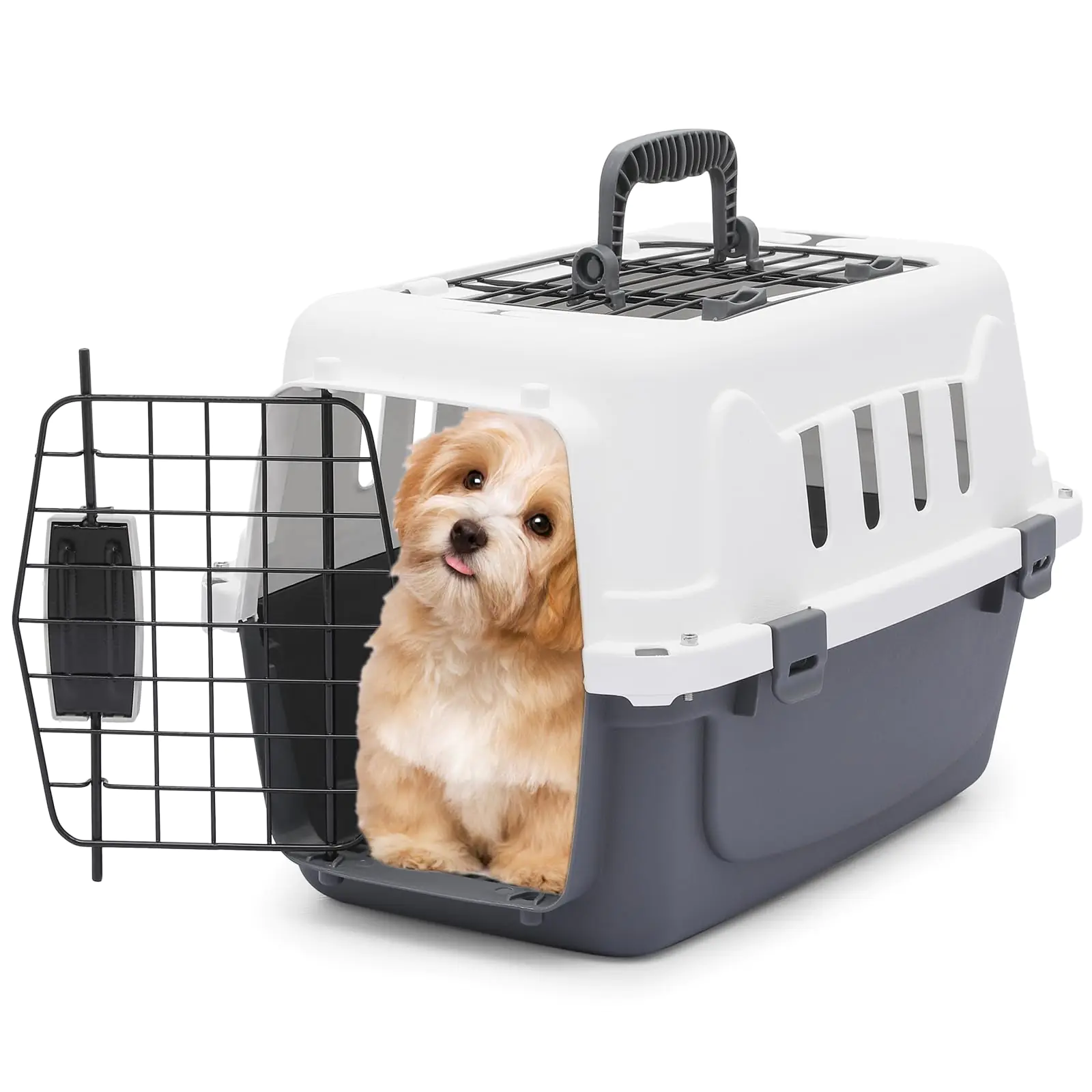
A front door can let a cat walk in when the carrier is placed in a familiar room. It can also be difficult if the cat backs away or resists approaching the opening. A top door may make it easier to place bedding or access the interior, but lifting a cat through it can be stressful if the cat is not comfortable with handling. Neither format should be used to force a frightened cat inside. One two-door hard-sided carrier example (paid link to Amazon) has both front and top entry, so you can compare door layout while still choosing for your cat's comfort.
Check whether the top opening locks securely, the front door closes reliably, ventilation remains unobstructed, and the carrier can be cleaned. Use the exact model's dimensions and manufacturer instructions. A second door does not automatically mean easier travel; the cat's comfort and caregiver's ability to close the door calmly matter.
Practice the opening and prepare for transport
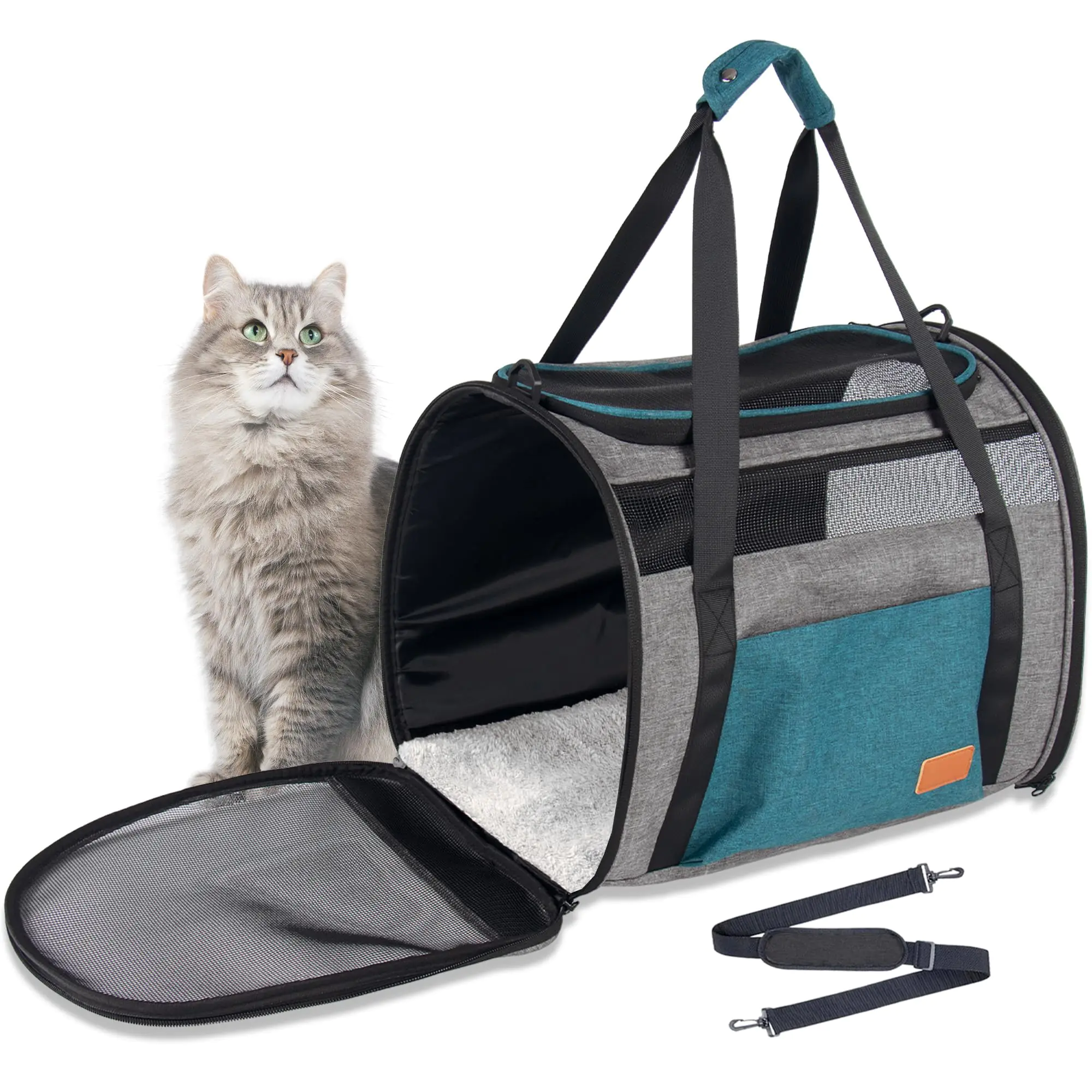
Leave the carrier open in a quiet area with familiar bedding. Reward voluntary exploration. Once the cat is comfortable, practice moving the door briefly and reopening it; stop if the cat becomes distressed. If the cat has a history of intense travel fear, ask a veterinarian for an individualized plan.
For car travel, follow FelineVMA's 2025 recommendation to secure the carrier on the floor behind the driver or passenger seat. Use a seat belt only with a crash-test-certified carrier. Opening style does not change that safety guidance.
- Check latches before each trip.
- Keep the carrier closed during stops.
- Never let a cat ride loose in a moving car.
Practical decision check
Try the door style before you buy: Place the open carrier on the floor in a quiet room and see whether your cat approaches it, walks in, or only investigates from above. Check whether you can operate the latch with one hand while keeping the carrier stable. A top door may help with access to bedding, but lifting a cat through it can be stressful. A front door may allow voluntary entry, but it needs enough clearance in the room and car.
Inspect both openings for secure latches and check that the cat cannot push a door outward. For a hesitant cat, keep the carrier open and reward short approaches; avoid using the door to trap the cat. Whichever opening you choose, vehicle placement guidance does not change: FelineVMA recommends the floor behind a front seat and seat-belt use only with crash-test-certified carriers.
Keep reading: cat carrier setup guide · making the carrier familiar · carrier fit
Helpful source: FelineVMA: 2025 transportation of cats in motor vehicles
Product-category images are illustrative examples only; they do not represent a Raspaw product test, safety certification, or recommendation.
Optional hard-sided carrier to compare
If you need a replacement, this model illustrates a rigid carrier with both entry points; do not lift or place a cat through an opening unless the cat is comfortable. The Amazon Basics two-door carrier (paid link to Amazon) listing gives outer dimensions of 22.8 × 15 × 13 in and describes front and top entry. These are outside dimensions, not the usable interior; compare the inside space with your cat and inspect ventilation and every latch. The listing alone does not establish crash-test certification.
Follow the exact carrier and vehicle instructions. Use a seat belt only if that carrier is crash-test certified, and let the cat approach and leave the open carrier voluntarily during home practice.
As an Amazon Associate I earn from qualifying purchases.