Leaving a cat carrier out between trips can make it a familiar object instead of something that appears only before a stressful ride. Set it up as an open resting option in a quiet place and let your cat choose whether to explore. If you are comparing a replacement, this two-door hard-sided carrier example (paid link to Amazon) lists outside dimensions of 22.8 × 15 × 13 in; compare the usable interior with your cat and do not assume it is crash-test certified.
Leave the carrier open in a quiet spot, secure its door so it cannot swing shut, and let your cat choose whether to approach.
Choose a quiet, low-traffic location
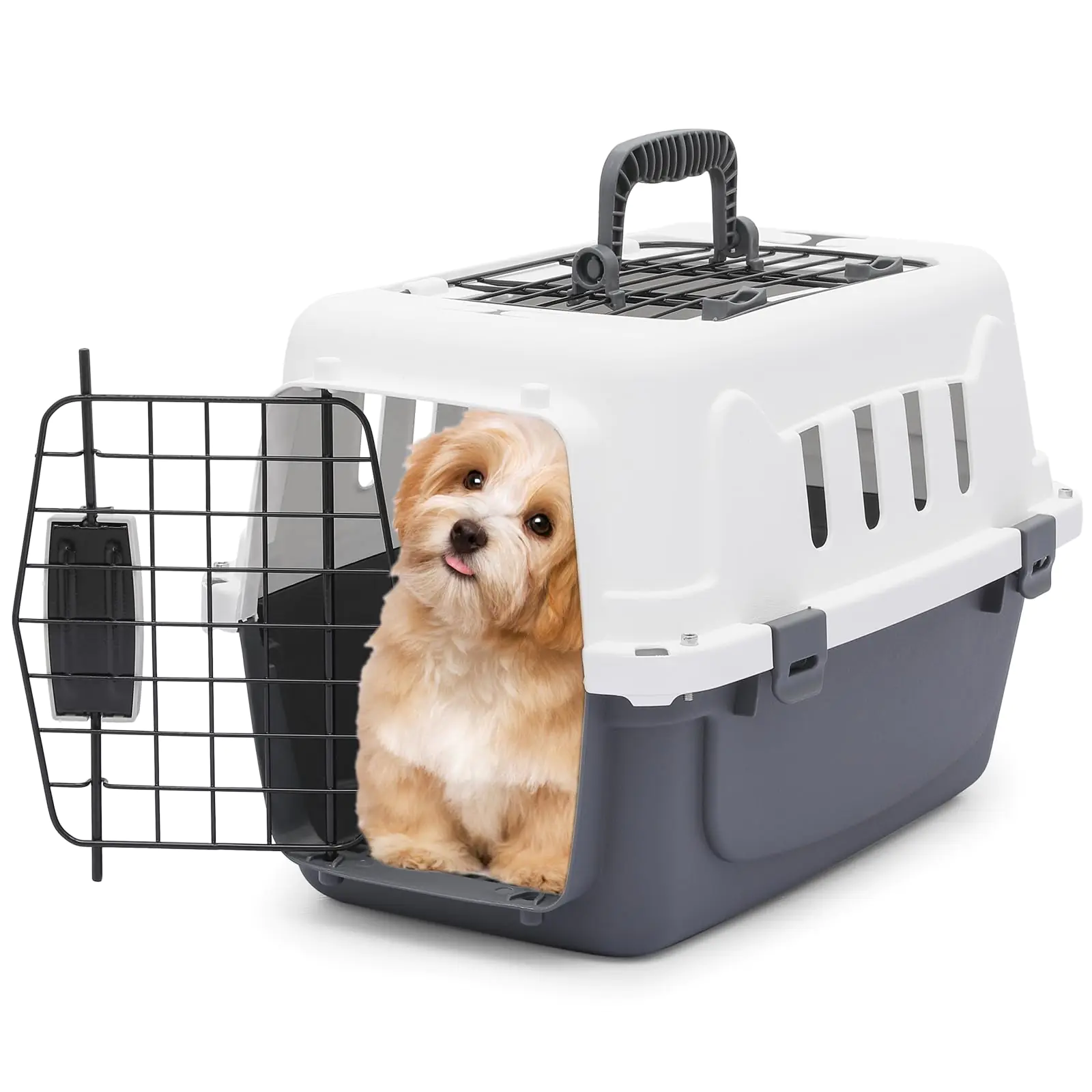
Put the carrier on a stable floor or low surface where it cannot tip. Leave the door secured open so it cannot swing shut unexpectedly, and keep a clear path in and out. Avoid placing it beside a loud appliance, in a narrow hallway, or near the litter box. A familiar blanket can make the interior feel recognizable; wash it as needed and keep it dry.
Do not put food inside if it creates competition with another pet or makes the cat feel trapped. You can place a treat near the entrance and later inside, then allow the cat to leave. Keep any straps, loose mesh, or small parts out of chewing reach.
Build familiarity without forcing a travel session
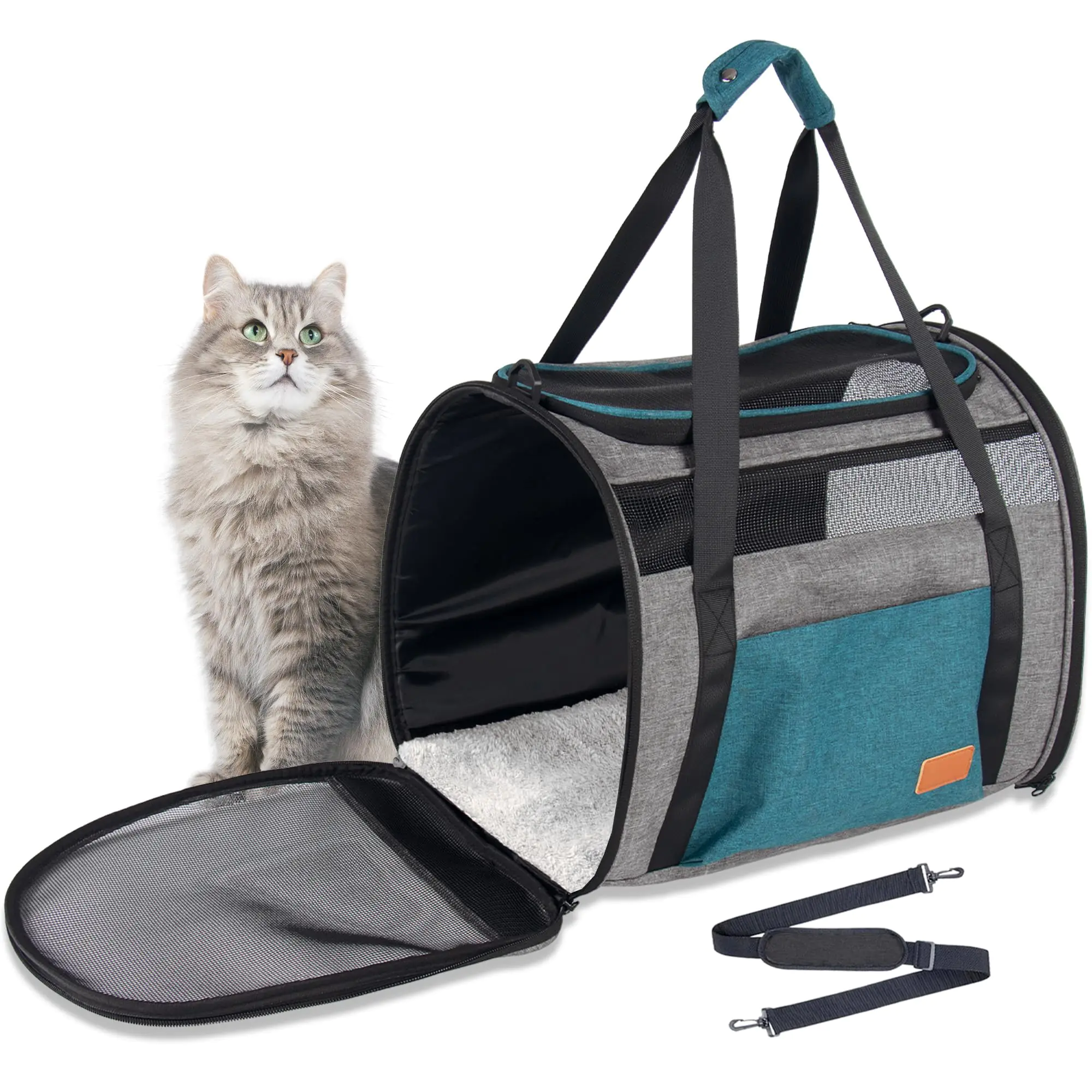
Let the cat investigate at its own pace. Reward calm sniffing, stepping inside, or resting there. After the cat routinely enters, you can briefly move the door and reopen it while the cat remains comfortable. Do not close the cat in as a surprise or lift the carrier before the cat is ready. If the cat avoids the carrier, pause and make the space calmer rather than blocking escape.
When a trip is needed, check the carrier's latches and fit, then follow current FelineVMA vehicle advice: place it on the floor behind the driver or passenger seat. Use a seat belt only with a crash-test-certified carrier.
- Keep the carrier available on ordinary days, not just appointment days.
- Wash or replace bedding according to its care label.
- Ask a veterinarian for help if travel distress remains severe.
Before choosing or traveling
In a small home, choose a corner where the door can remain fully open and the carrier will not be kicked or used as a storage bin. Check bedding weekly for dampness, fur, or spilled treats. If other pets approach the carrier, keep the cat's access peaceful and ensure no animal blocks the only exit. Familiarity is built through repeated safe access, not by leaving the cat shut inside.
Keep reading: cat carrier setup guide · brief door practice · bedding introduction
Helpful source: FelineVMA 2025 transportation position statement
Product-category images are illustrative examples only; they do not represent a Raspaw product test, safety certification, or recommendation.
Optional two-door carrier to compare
The Amazon Basics listing describes front and top entry and gives outside dimensions of 22.8 × 15 × 13 in. Compare its usable inside space with your cat’s measurements, inspect every latch, and leave the door secured open during home familiarization. The listing alone does not establish crash-test certification.
For vehicle travel, follow the carrier maker’s instructions and current FelineVMA advice. Use a seat belt only with a crash-test-certified carrier; otherwise place it as recommended by your veterinarian or FelineVMA. Never close the cat inside as a surprise.
Compare the Amazon Basics two-door carrier (paid link to Amazon)
As an Amazon Associate I earn from qualifying purchases.