Vertical options can make a small room more interesting by adding places to perch, rest, and observe. Stability, safe access, and resource placement matter more than the number of shelves. A cat must be able to choose whether to use the space.
Vertical options can make a small room more interesting by adding places to perch, rest, and observe. Stability, safe access, and resource placement matter more than the number of shelves. A cat must be able to choose whether to use the space.
Map the route before adding furniture
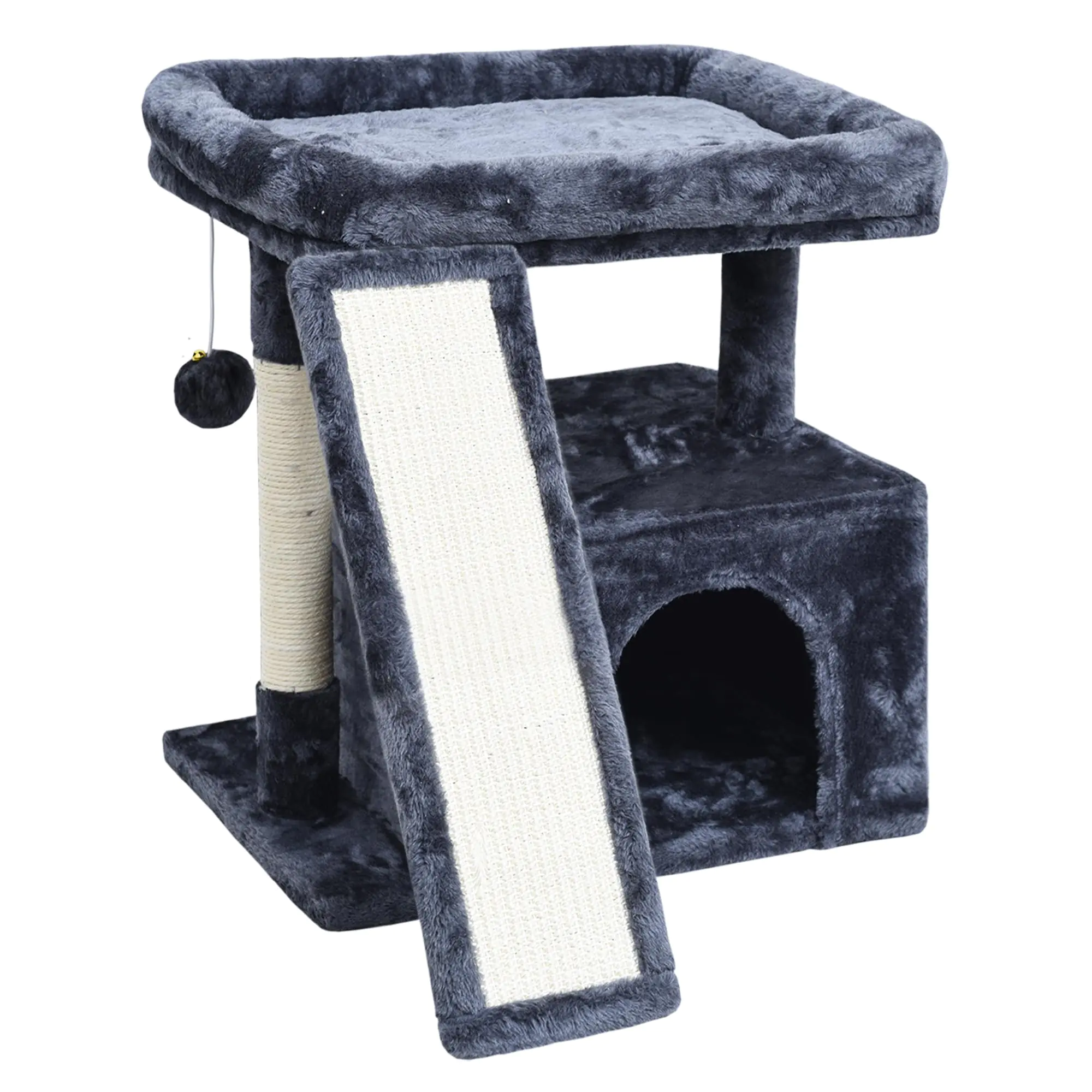
Notice where your cat already jumps and rests. Plan an accessible route between stable surfaces, keeping doors, heaters, and narrow escape paths clear. Older cats or cats with mobility concerns may need lower steps or veterinary advice before you change jumping demands.
Prioritize secure installation

Choose a freestanding cat tree with a wide stable base or wall-mounted shelves installed with hardware suitable for the wall. Follow load limits and manufacturer instructions; check stability by hand before allowing access. Do not position a perch over a fragile object or dangerous drop.
Pair height with other resources

Keep litter, food, water, scratching, and rest options easy to access rather than forcing every resource upward. A small cat tree can combine a perch and scratch surface, but inspect whether its dimensions suit your room and cat. In multi-cat homes, create more than one route where possible. A window-mounted cat perch (paid link) can add a separate observation point only when the window and installation are suitable.
Let the cat set the pace

Introduce one surface at a time and reward voluntary exploration if the cat enjoys food rewards. Never place a frightened cat on a high shelf. For more on room design, see An Indoor Cat-Friendly Home and stable window perch setup.
For the full room-by-room framework, see An Indoor Cat-Friendly Home and How to Set Up a Quiet Hiding Place for Your Cat.
The medium listing for the Zakkart SnugCloud cat window perch (paid link) gives a 22.8 × 15.7 inch footprint and states a 40 lb limit. Those are listing specifications, not an assessment of your window. Check exact fit and glass compatibility, follow the maker’s installation instructions, inspect the attachment routinely, and do not position it over a dangerous drop. If this mounting method is not appropriate, compare a properly installed shelf or a stable freestanding tree instead.
Other useful comparison terms include small cat trees, wall-mounted cat shelves, and compact scratchers; compare dimensions, access routes, and the maker’s maintenance instructions.
Affiliate disclosure: Links marked “paid link” are Amazon affiliate links. As an Amazon Associate I earn from qualifying purchases.
- Ohio State Indoor Pet Initiative: hiding
- Ohio State feline life-stage guidelines
- Ohio State Indoor Pet Initiative: bringing cats indoors
This guide is general educational information, not veterinary diagnosis or individualized behavior advice. Consult your veterinarian about health concerns.