Short interactive play lets a cat stalk, chase, and catch a toy with a person controlling the movement. Keep play voluntary and supervised, and choose toys that can be put away safely afterward.
Short interactive play lets a cat stalk, chase, and catch a toy with a person controlling the movement. Keep play voluntary and supervised, and choose toys that can be put away safely afterward.
Choose an appropriate toy and clear the area
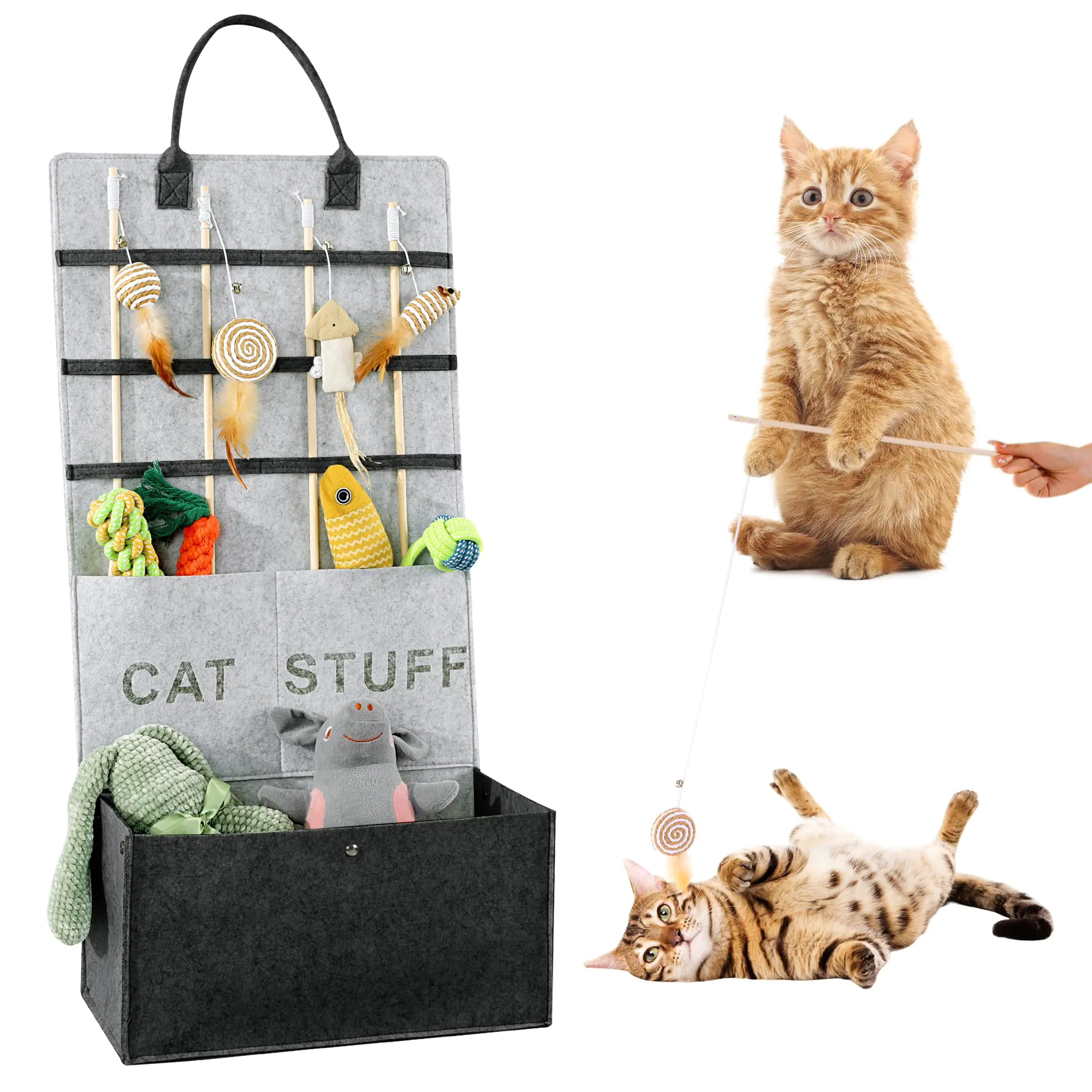
Use a wand or toy without damaged parts and move fragile items out of the play path. Avoid hands and feet as targets. Check that cords and elastic are intact, and do not use a toy that the cat can swallow.
If you need an example to compare, the Cat Charmer fabric-ribbon wand (paid link to Amazon) pairs a polycarbonate wand with a fabric strip for play you control. Keep a suitable toy you already own if it works for your cat. This ribbon toy is for supervised interaction only: do not let the cat chew or swallow the fabric, and put the whole toy away afterward.
Move the toy like prey, with pauses

Let the toy travel along the floor or behind a safe object, pause, and give the cat a chance to stalk. Allow occasional catches. Keep the session brief and end if the cat disengages, pants, or seems distressed.
Finish and store safely

Put the wand away in a closed drawer or cat-inaccessible organizer after play. A small food reward may suit some cats, but consider dietary needs and avoid changing the cat’s meal plan without advice. Interactive play should complement, not replace, veterinary care.
Observe the cat’s preferences

Some cats prefer ground movement; others like a higher target. Offer choice and stop if the cat avoids the toy. For a complete play environment, visit An Indoor Cat-Friendly Home and safe toy rotation.
For the full room-by-room framework, see An Indoor Cat-Friendly Home and How to Set Up a Quiet Hiding Place for Your Cat.
One fabric-ribbon wand to compare for the stalking, chasing and catching play described above. A familiar suitable toy may be all you need; your cat can choose not to play.
Compare the fabric-ribbon style and wand with your cat’s play habits. Inspect the fabric and attachment before each session. Stop if the cat chews the ribbon or if any part frays, loosens or breaks. Store the entire toy out of reach after use; do not leave it hanging, tie it to furniture or offer it for unattended play.
Follow the maker’s care instructions. This is not an indestructible toy, a chew toy or a treatment for behavior or health problems. No price or availability is guaranteed.
View the Cat Charmer and current details on Amazon (paid link)
Affiliate disclosure: We may earn a commission from purchases through the paid links in this article. As an Amazon Associate I earn from qualifying purchases.
- Ohio State Indoor Pet Initiative: hiding
- Ohio State feline life-stage guidelines
- Ohio State Indoor Pet Initiative: bringing cats indoors
This guide is general educational information, not veterinary diagnosis or individualized behavior advice. Consult your veterinarian about health concerns.