Choose a dog cargo liner by measuring the cargo floor, the rear-seat back, and the bumper edge where your dog steps. A liner that covers the floor but not the step-in area may leave the highest-contact surface exposed.
Quick take
Measure the floor, seat backs, and entry edge
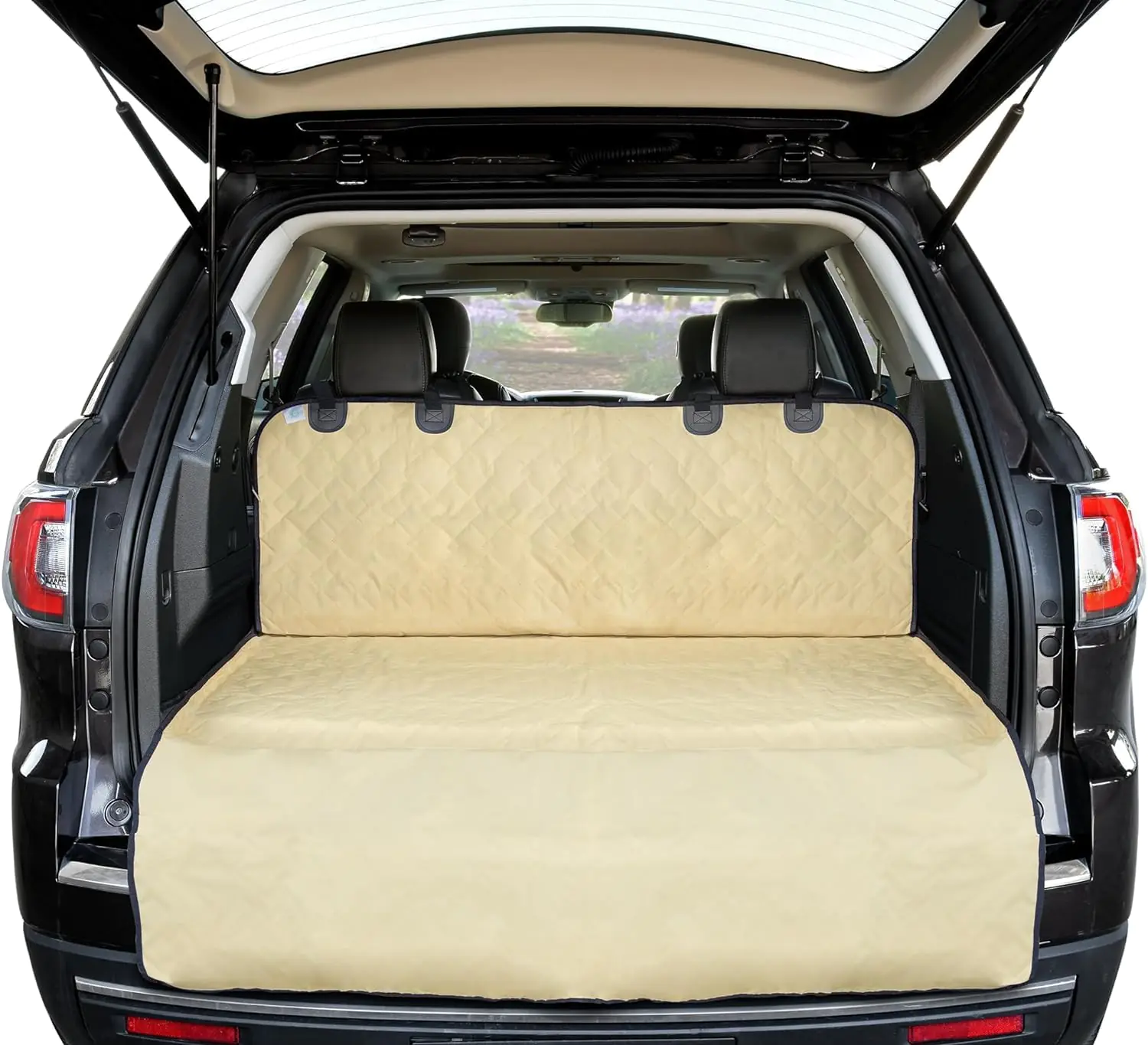
With the vehicle parked, measure the cargo floor's width and depth, then the upright seat-back height and bumper lip. If you fold one or more seats, measure that configuration too. Note side pockets, wheel wells, tie-down points, and any hooks the liner is designed to use. Compare each dimension with the product diagram, not just the listed vehicle fit.
For a concrete listing to compare, the iBuddy SUV cargo liner with bumper-flap protection (paid link to Amazon) is described for universal and large SUVs. Treat that broad fit wording as a starting point: compare your measurements with the diagram for the exact option and check the current care details. Raspaw has not independently tested this item.
Consider how your dog enters the cargo area and whether a bumper flap is useful for your car. Make sure the flap can be folded away when you load ordinary cargo. Do not cover ventilation, safety equipment, or a required latch.
Check care, grip, and restraint separately
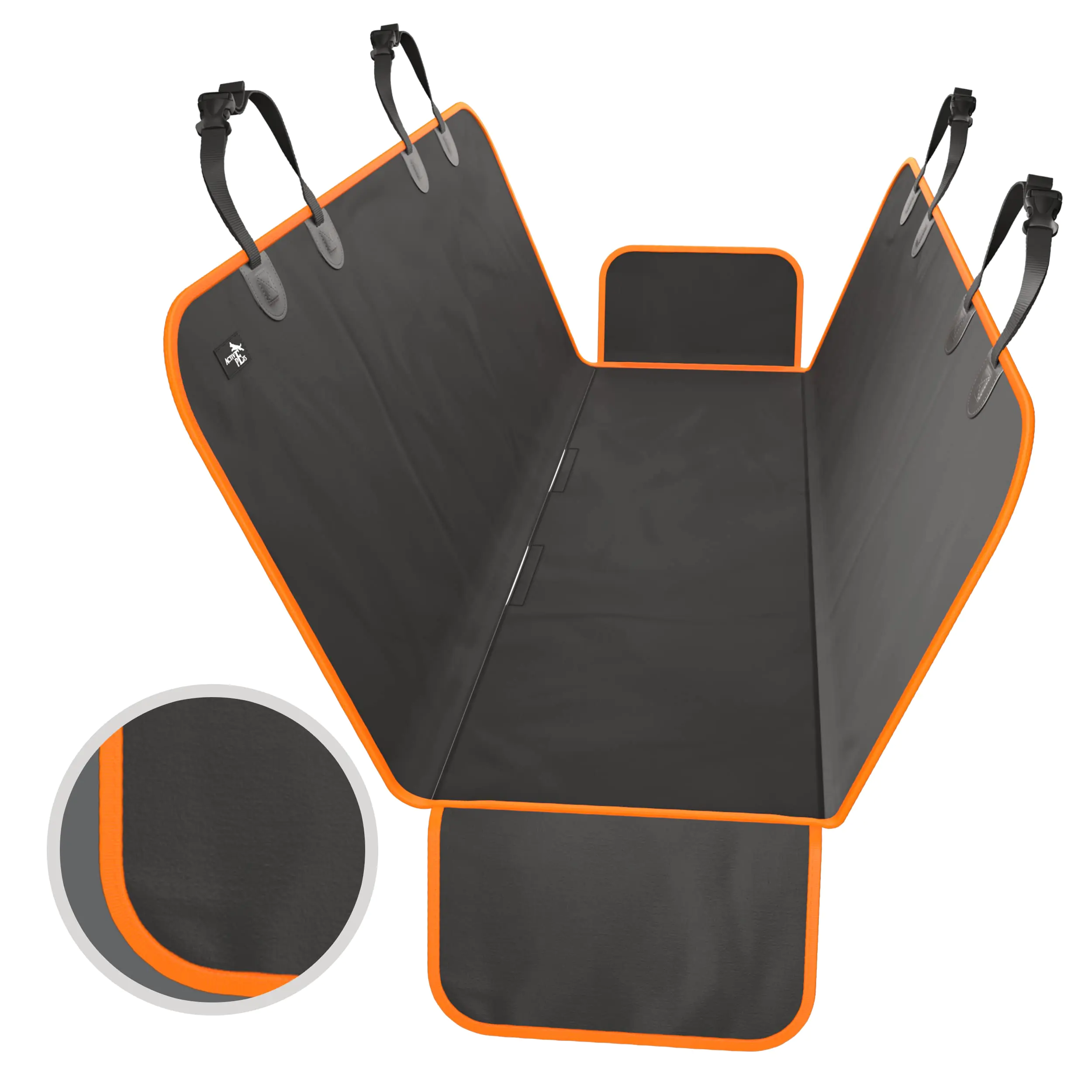
Read the material, seam, backing, wash, and drying information. “Waterproof” in a title is not enough to establish how seams or worn areas perform. Check whether the liner can be removed without leaving residue or trapping moisture on the vehicle carpet. If the backing bunches or slides, stop and reposition it.
A cargo liner is an upholstery layer, not a crash restraint or barrier. Keep the dog secured in a suitable area using a restraint method that follows its manufacturer and vehicle directions. Review the setup after changing seats or cargo. See the full car-interior guide and cleaning after a muddy trip.
Before choosing or traveling
Fit test with the vehicle parked: Attach the liner, open and close the tailgate, fold the seats you use, and check whether the bumper flap stays in place. Remove the liner if it covers a latch, blocks cargo access, or catches a restraint strap. Take a photo of the installed fit and measurements so you can compare replacement liners later.
Keep reading: dog car-interior protection guide · back-seat measurement checklist
Helpful source: AAHA travel safety guide
Product-category images are illustrative examples only; they do not represent a Raspaw product test, safety certification, or recommendation.
Optional SUV cargo-liner example
The Amazon listing describes an iBuddy cargo liner with bumper-flap protection for universal and large SUVs. A broad fit label is not a guarantee for your vehicle. Compare the cargo floor, seat-back, bumper edge, and tie-down layout with the diagram for the exact option, and confirm its current material and care instructions. Keep latches and restraint straps clear; a cargo liner is not a crash restraint or barrier. Raspaw has not independently tested this item.
As an Amazon Associate I earn from qualifying purchases.